
FLOORING GUIDES
Unfinished Oak Flooring: Planning Colour and Site Finishing
Planning raw solid oak parquetry? Compare herringbone and chevron formats, agree a finish sample, and separate flooring supply from site finishing in your quote.
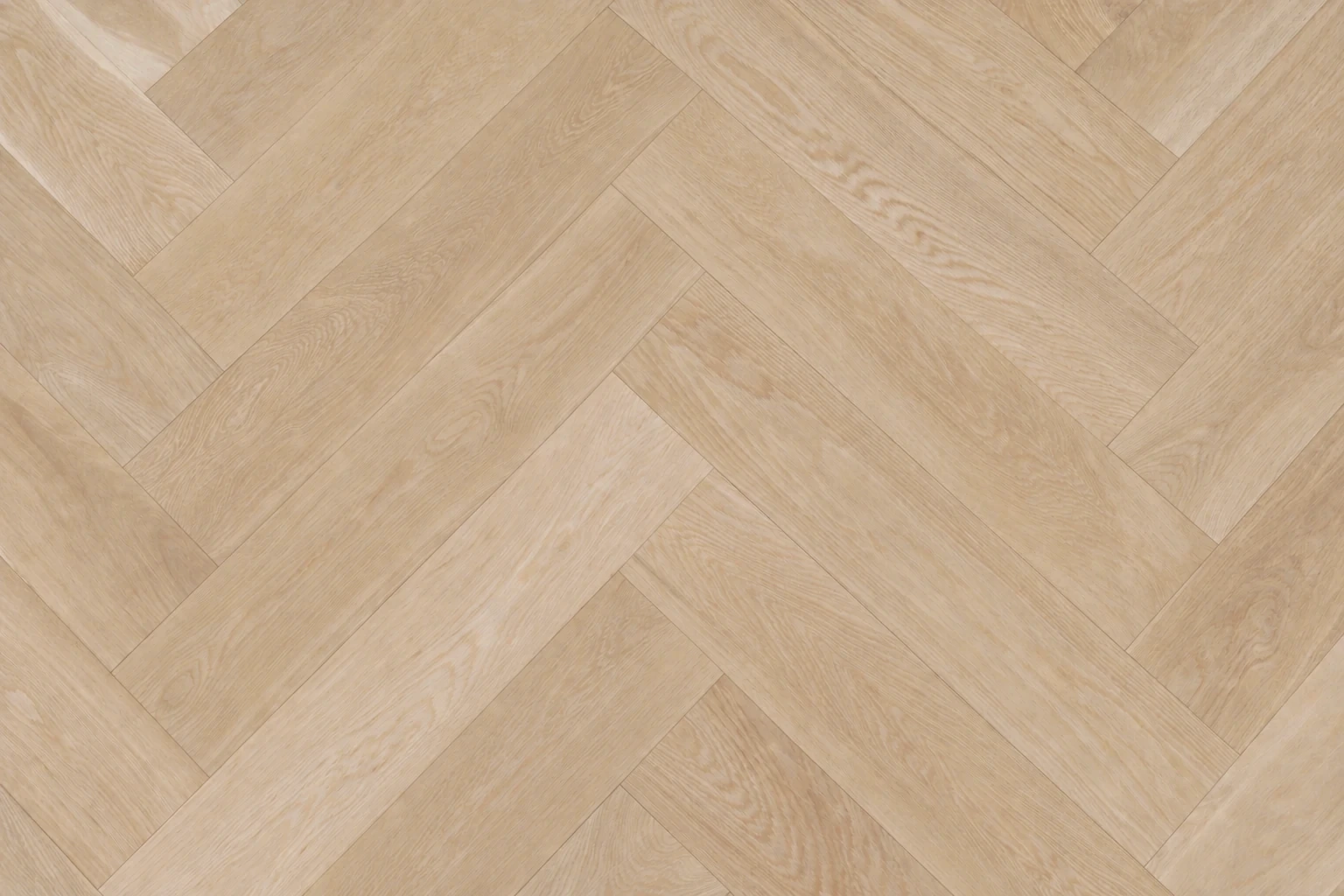
What unfinished oak flooring means
Unfinished oak flooring is supplied without the completed factory surface finish. It gives the project team a starting material for a site-finishing brief, rather than a finished colour selected from a factory colour range. The finished appearance depends on the timber, its preparation and the coating system chosen for the job.
Bestwork’s solid European oak parquetry is supplied raw and unstained, at 18 mm thickness. If you are comparing it with the engineered collection, note that Natural Oak is a named matte factory finish in that collection. It is not another term for raw solid oak. The European oak selection guide explains the difference between timber, construction and supplied finish.
Select the parquetry format first
The current raw solid range includes two herringbone sizes and two chevron sizes. Choose the format with the room plan and installer before developing the finishing brief. Changing board size or pattern later can affect the layout, ordering allowance and installation quotation.
| Pattern | Dimensions | Supplied finish | Product information |
|---|---|---|---|
| Solid herringbone | 610 × 125 × 18 mm | Raw / unstained | 610 mm herringbone |
| Solid herringbone | 450 × 90 × 18 mm | Raw / unstained | 450 mm herringbone |
| Solid chevron | 590 × 125 × 18 mm | Raw / unstained | 590 mm chevron |
| Solid chevron | 850 × 95 × 18 mm | Raw / unstained | 850 mm chevron |
The solid herringbone uses tongue and groove. The solid chevron is supplied without tongue and groove; confirm the profile and chevron angle for the selected product. For the visual distinction, see herringbone versus chevron. For ordering, use the current carton information on the product page rather than assuming equal coverage across different sizes.
Agree a physical finish sample
Describe the intended colour and sheen using the actual materials around the floor. Reference photographs are useful for communicating a direction, but an approved sample on the selected timber gives the installer or finisher a more useful reference. Compare it beside the wall, cabinetry and stone samples in the planned lighting.
Ask the flooring professional to propose a compatible preparation and coating system, and record what was used on the approved sample. Natural grain and colour variation remain part of a timber floor, so discuss how that variation is represented in the sample. A raw board viewed on its own does not show the completed appearance of every possible coating system.
For a factory-finished alternative, compare light and natural oak finishes in the engineered range. Those named finishes are a separate supply option; do not treat a photograph of one as a guaranteed match for a site-finished solid floor.
Separate flooring supply from site work
A flooring supply price and an installed, finished floor quotation can cover very different work. Before comparing totals, ask each provider to identify its scope. The following items are useful prompts for the installer or finisher’s quotation:
- Assessment of the site and subfloor, including any preparation or remedial work.
- Layout, installation method and the required cutting allowance for the chosen pattern.
- Surface preparation and the proposed coating system, including the agreed finish sample.
- Access arrangements, protection, handover and the point at which other trades or furniture can return.
The ATFA solid timber specification discusses assessment before sanding and following coating manufacturers’ requirements. Obtain the programme and care instructions for the actual system being used. Drying, curing and access arrangements need to be confirmed for that system and site, rather than taken from a general online timetable.
Coordinate delivery, storage and installation
Tell the supplier and installer where the flooring will be delivered and who will receive it. Agree responsibility for checking the order and following the product’s handling and site requirements. Confirm that the installer has the exact dimensions and profile before setting out the pattern or preparing an installation quotation.
Record the selected product, area, ordering allowance and carton quantity on the final order. Our flooring cost and quote guide includes a carton coverage comparison linked to the current product information, as well as a checklist for comparing supply and installation scopes.
Request raw oak trade supply
Flooring retailers and wholesalers can contact Bestwork with the preferred herringbone or chevron size, approximate area, project location and timing. Mention that the brief requires raw, unstained solid oak and identify any samples or product information the finisher needs. Confirm availability, commercial pricing and delivery arrangements before scheduling site work.
Bestwork has its supply base in Melbourne’s east. Delivery can be arranged to Victoria, NSW, ACT and Adelaide in South Australia. Explore the solid oak collection or send a trade supply enquiry; include the selected format so the response can address the correct product.