
FLOORING GUIDES
Herringbone Flooring Sizes: 450, 610 and 900 mm Compared
Compare 450 × 90 mm and 610 × 125 mm solid oak with 900 × 150 mm engineered herringbone. Read the size chart, understand thickness and work out cartons for your order area.
Updated 2 November 2026
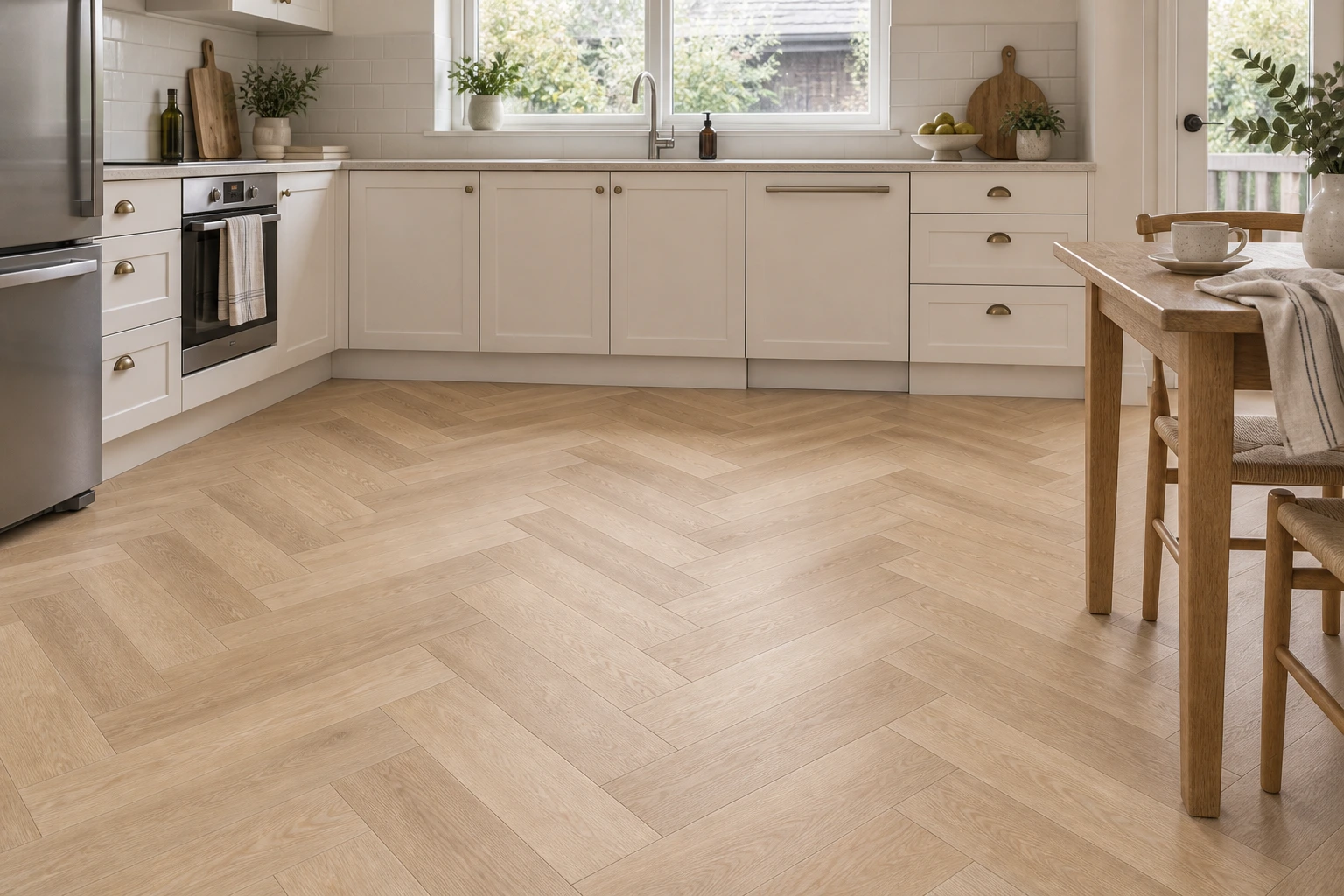
Herringbone is one pattern, but the board you choose changes its scale, its construction and how it is finished. Bestwork offers three herringbone boards: raw solid oak in 450 × 90 mm and 610 × 125 mm, and engineered OAK / EDITIONS oak in 900 × 150 mm. This guide compares all three.
At a glance
| Detail | Solid 450 | Solid 610 | Engineered 900 |
|---|---|---|---|
| Board size | 450 × 90 × 18 mm | 610 × 125 × 18 mm | 900 × 150 × 15/4 mm |
| Construction | Solid European oak | Solid European oak | 4 mm European oak over a multi-layer eucalyptus hardwood plywood core |
| Surface | Raw / unstained | Raw / unstained | Matte UV lacquer (10–12 coats), 10–15% wire brushed |
| Profile | Tongue and groove | Tongue and groove | Tongue and groove |
| Per carton | 28 pcs · 1.134 m² | 20 pcs · 1.525 m² | 14 pcs · 1.89 m² |
How to read herringbone flooring dimensions
Board dimensions are given as length × width × thickness. A 450 × 90 × 18 mm solid oak board is 450 mm long, 90 mm wide and 18 mm thick. The 610 × 125 × 18 mm format is longer and wider, with the same overall thickness.
For the engineered 900 × 150 × 15/4 mm board, 15/4 means 15 mm overall thickness, including a 4 mm oak wear layer. It does not mean 19 mm total thickness. Compare overall thickness when discussing floor levels, door clearances and transitions with your installer.
These figures describe an individual board, not the width of an installed zigzag or a complete pattern repeat. Ask your installer for a scaled set-out showing the chosen boards, starting line, perimeter cuts and transitions between rooms.
Scale: small, medium and large blocks
The 450 × 90 mm board is the most compact. Smaller blocks repeat the zigzag more often, which suits a finer, more detailed floor. In our photographs the 450 board is also laid as double herringbone and basket weave.
The 610 × 125 mm board sits in the middle. It shows longer runs of grain between joints while keeping a classic herringbone proportion.
The 900 × 150 mm engineered board is the largest. Fewer joints and wider blocks give a generous, calm pattern that works well across open living areas.
Choosing a size for a small room or hallway
Compare the pattern across the actual width of the room, including the space visible around furniture. Smaller boards create more repeats; longer boards create fewer. Neither automatically makes every room look larger.
For a hallway, look from the entrance and check how the pattern continues through doorways. For an open living area, compare a sample layout from more than one viewing position. Keep the board colour similar during this comparison so you can judge scale separately from finish.
Use the 450 mm solid herringbone, 610 mm solid herringbone and 900 mm engineered herringbone pages to review the exact products. The light and natural oak guide can help with the separate colour decision.
Solid or engineered
The two solid oak boards are 18 mm thick and supplied raw, so the final colour and coating are chosen on the project. The engineered board arrives finished in one of five matte colours: Burnished Java, Latte Tan, Natural Oak, Satin Greige and Washed Sand. Our guide to solid vs engineered oak flooring explains the construction difference in more detail.
Cartons by floor area
Carton numbers are floor area divided by carton coverage, rounded up, before any cutting allowance. Confirm final quantities with your installer.
| Floor area | Solid 450 | Solid 610 | Engineered 900 |
|---|---|---|---|
| 10 m² | 9 | 7 | 6 |
| 20 m² | 18 | 14 | 11 |
| 50 m² | 45 | 33 | 27 |
| 100 m² | 89 | 66 | 53 |
A worked carton example
Use the order area confirmed by your installer, including the allowance they specify for the layout. Divide that figure by the selected product’s carton coverage and round up to a whole carton.
For example, if the confirmed order area is 22 m², the 610 mm solid board calculation is 22 ÷ 1.525 = 14.43, so the order needs 15 cartons, covering 22.875 m². This is a calculation example, not a recommended cutting allowance. The table above uses net floor area only.
Do not transfer one product’s carton count to another size. Confirm current carton coverage, left/right board requirements, any borders and spare material before ordering. Our flooring cost and quote checklist helps you compare supply, delivery, installation and finishing on the same basis.
Before you request samples
- Name the board size and whether you want raw solid oak or factory-finished engineered oak.
- Include the room or hallway dimensions, project location, approximate floor area and timing.
- Compare several boards together; a single board cannot show the full grain variation or pattern scale.
- For raw solid oak, plan a coated sample with your installer. The unfinished oak guide explains what to discuss before choosing the finish.
Still deciding between the staggered herringbone pattern and the continuous V of chevron? See herringbone vs chevron before comparing dimensions.
Samples and trade supply
Flooring retailers and wholesalers can request physical samples and trade pricing through our physical sample enquiry or by calling 1300 003 988. We are based in Melbourne’s east, Victoria, with delivery across Victoria, NSW and the ACT, and to Adelaide, SA.